


 +971 56 432 2792















Content marketing is no longer a luxury for real estate professionals—it’s a necessity. In today’s digital world, buyers and sellers turn to search engines before making decisions, and real estate businesses that master content marketing gain a significant advantage. This article explores how content marketing enhances real estate SEO success, helping agents and agencies rank higher, attract leads, and convert them into clients.
Understanding Content Marketing in Real Estate
The practice of producing and disseminating worthwhile, timely, and consistent material in order to draw in and hold on to a target audience is known as content marketing, in contrast to traditional advertising, which emphasizes sales, content marketing concentrates on giving prospective customers helpful information that fosters trust.
Traditional Marketing
Traditional marketing in real estate relies on direct promotions, such as billboards, TV ads, and cold calls. In contrast, content marketing educates potential buyers and sellers, helping them make informed decisions while subtly positioning a real estate business as an authority in the field.
Why SEO Matters for Real Estate Success
SEO (Search Engine Optimization) determines where your real estate website ranks on search engines like Google. Higher rankings mean more visibility, which translates to more potential buyers and sellers discovering your business.
- The Impact of Search Engines on Real Estate Businesses
With 97% of home buyers starting their property search online, appearing on the first page of search results is crucial. If your website isn’t optimized, you risk losing business to competitors who are ranking higher.
- How SEO Helps Generate Leads and Conversions
A well-optimized website with strong content marketing can attract targeted traffic—people who are actively searching for real estate services. This increases the chances of turning visitors into leads and, eventually, clients.
The Connection Between Content Marketing and SEO
Content marketing and SEO go hand in hand. High-quality content helps improve search rankings by keeping users engaged, increasing dwell time, and encouraging backlinks from reputable websites.
Types of Content That Enhance Real Estate SEO
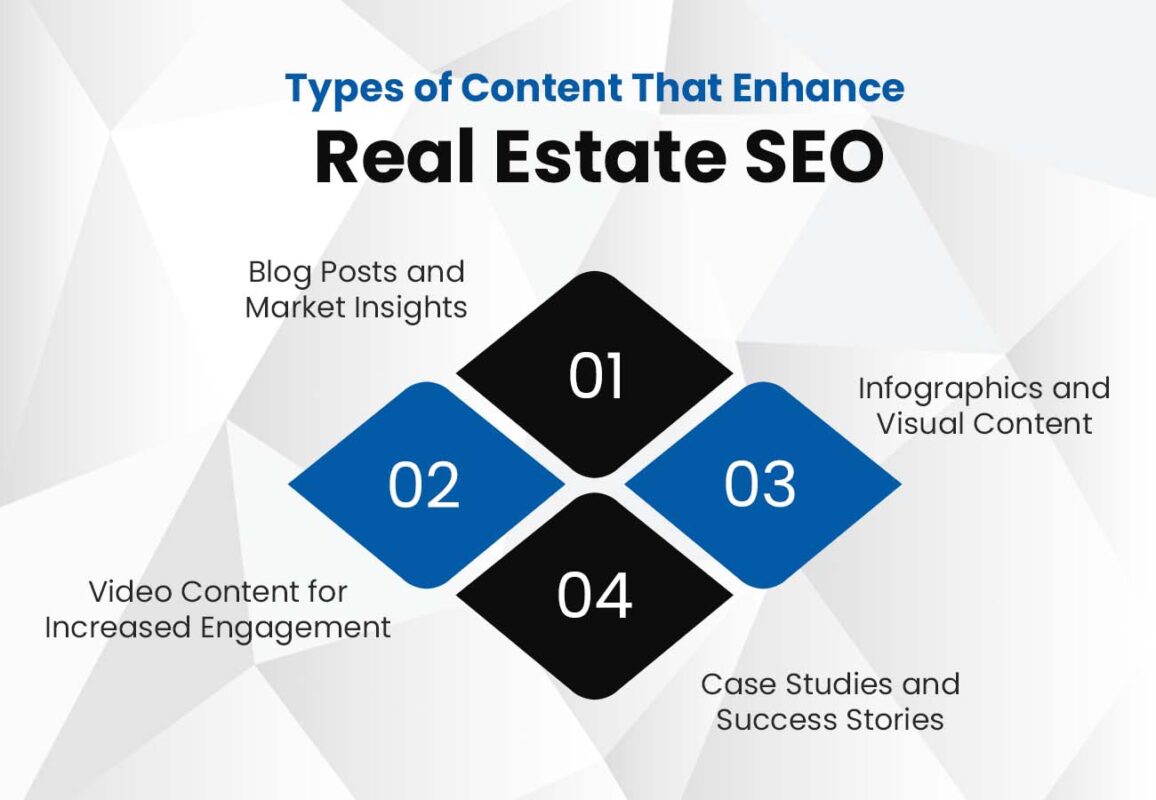
- Blog Posts and Market Insights
Publishing blog posts on market trends, home-buying tips, and neighborhood guides helps establish authority and keeps potential clients engaged.
- Video Content for Increased Engagement
Videos like virtual home tours, agent introductions, and client testimonials enhance engagement and improve dwell time, which positively impacts SEO.
- Infographics and Visual Content
People love visuals! Infographics simplify complex real estate data, making it easier to understand and share.
- Case Studies and Success Stories
Sharing customer success stories increases credibility and trust, which may increase conversion rates.
Keyword Research
Using the right keywords in content helps search engines understand what your website is about. Long-tail keywords (e.g., “best family homes in Miami under $500k”) attract highly specific traffic.
Local SEO
Since real estate is location-based, local SEO strategies—such as optimizing Google My Business, using geo-targeted keywords, and encouraging customer reviews—are essential.
The Role of Backlinks
Backlinks from reputable sites act as endorsements, improving a website’s authority. Collaborations with real estate bloggers and guest posting on industry websites can help earn quality backlinks.
Social Media and Content Distribution
Social media platforms such as Facebook, Instagram, and LinkedIn are great places to share content. Sharing blog posts, infographics, and videos increases website traffic and visibility for your material.
User Experience and SEO
A seamless, fast-loading, and mobile-friendly website improves user experience, which in turn boosts SEO rankings.
Measuring the Success
SEO tools like Google Analytics and SEMrush analyze website traffic, keyword rankings, and engagement data to determine how effective a piece of content is.
Common Mistakes
- Avoid keyword stuffing—it harms rankings.
- Don’t ignore analytics—tracking performance helps refine strategies.
- Low-quality or duplicate content won’t rank well and may harm credibility.
Bottom Line
For real estate SEO to be successful, content marketing is essential. Real estate companies may raise their search engine ranks, draw in new customers, and become leaders in their field by producing excellent, educational, and captivating content.